This is why Donna Trussell, author of the these blogs, struck a nerve in her blog on the bra game. She has ovarian cancer which is overlooked in awareness campaigns and is much deadlier than the more common breast cancer we hear so much about. She talks about "Cancer envy – wishing you could trade in your bad-stat cancer for a more benign variety – is known only to those with personal experience with this dreadful disease." She probably meant those with the disease since that is her perspective, but I think it can be applied to family, close friends, and caregivers too. My mom died of lung cancer, not a "womans" cancer and this caused some problems in her care. Not with her doctors, they were great, but with my mother's, sister's, and my education. Early on we contacted the American Cancer Society on the advice of my mom's doctor for support and to educate ourselves about the type of cancer she had. To say they weren't helpful is an understatement. They sent us 30 miles into the country for a support group when we lived in metro Denver because they said it was the one closest one to us. Anyone that has cared for a seriously ill person knows what a huge investment of time and energy just daily living takes. After work and life, getting to this support group was incredibly difficult. We were in Denver, not some little town without resources and they tell us to drive to the sticks for help? Then we turned to them for help when our itty bitty sub-basement apartment (all a 22 and 18 year old caring for a cancer patient without health insurance could afford) developed a severe flooding and subsequent mold problem which her doctor said was unhealthy for someone with LUNG cancer (duh), they told us they were very sorry but they had no suggestions for us. But what does this have to do with cancer envy? We contacted the ACS several times for resources or information on my mother's particular cancer. Each time we got transfered to multiple departments before someone would take pity on us and send us some pamphlets and booklets in the mail. This happened at least three times and every time they sent us information on breast, ovarian, and uterine cancer as though the only cancer that concerned a woman was in her "woman parts". This infuriated me. In every instance the ACS failed to listen to us and our needs. This from an organisation that claims to have insight into the special needs and concerns of cancer patients and their families. As you can see, even after more than 14 years this still sends me into orbit. I refuse to support this organization and will tell anyone within earshot why they shouldn't either. Go ahead, check them out with some of the charitable rating services. You will find many of these stories. I never did get a chance to research her cancer and I wonder how it affected her care. Were there questions we should have asked if we had more information? Were there treatments we could have pursued? We could not be an advocate in mom's care because we lacked information. I kept thinking it would be so much easier if she had a "womans" cancer. I would have had more help and education than I could handle. To this day, the sight of millions of pink ribbons for months on end gives me a disquieting left out feeling. I understand what drove this obsession with awareness of cancer specific to women. Once upon a time our male dominated medical profession spent much less time researching and treating those cancers. But that was long ago and it's time we remembered that women can and do get cancer in all parts of our bodies. As Donna stated in her blog, "But don't color me pink. Or teal [the color for ovarian cancer]. I want a new color. I want a rainbow. We use the word "cancer" for what is probably a thousand different diseases. The segregation and disparity in funding between types of cancer is absurd. Name any cell in your body, and you've just named a chance for mutation and cancer – at any time, for any person."
Sunday, October 10, 2010
Facebook games, cancer, and my mom
A few days ago a friend of mine posted a link to a blog at Politics Daily about the Facebook "cancer" games that have been going around. You know, where women get a message to change their status to the color of their bra or where they put their purse using suggestive language all in the name of cancer awareness. I have to say it made me think a little deeper about how helpful that actually is, how silly it is, and how damaging from a Christian perspective, which is not the subject I wish to discuss today. The word cancer brings many of my family to mind. My father has so far survived malignant melanoma. My maternal grandfather died of the same lung cancer that took my mom. Both my grandmothers survived breast cancer in an age when that was hard to do. My paternal grandmother did eventually die of stomach cancer. Then there are the numerous aunts and uncles who had some form of cancer or another, many of whom succumbed eventually. But the one I think of most at the mention of cancer is my mom. Maybe because she was the closest to me to die of cancer. Maybe because I was only 22. Maybe because my sister, younger than me by four years, and I were her only caregivers at a time when our peers and friends were all in college where we only wished we could be. Beyond that, my mom has been in my thoughts a lot lately for many reasons. November marks both her death and her birth and I frequently think of her most often this time of year. It's the start of the holiday season. My sister just got married and I was aware of a big hole in the festivities that would have been filled by Mom. I have a four year old that is going through a trying stage and I want to talk to my mom about what to do.


Friday, April 16, 2010
CreativeLive
Thanks to a member of a photography group I belong to, I found this site, CreativeLive. Based out of Seattle, they offer online classes in a variety of subjects although it looks like photography is the mail focus. If you watch the classes live they are free, if you would like to watch at another time or keep the lessons for later use, you may purchase the course. I signed up for a couple of courses. A 10 week Fundamentals of Digital Photography course and a 3 week Creative Eye course taught by Art Wolfe. The Fundamentals course is $79 while the course is running and $129 after it is over. A price will be listed for the Creative course once it has started. I'm excited to learn and grow and maybe end some frustration. I'm not sure I can attend all the courses or that Calissa will let me listen to the whole thing, but I'm gonna learn something! It looks like they have portions of the class available for viewing on the site too. I watched the first 10 minutes of the Fundamentals course and wish I could devote the time today to the rest, but chores must be done.
Thursday, February 25, 2010
My beautiful, amazing daughter
Being a mother is both the greatest joy and largest stress of my life. I'm sure all you parents out there totally understand. It's way beyond what I ever imagined. It's a gift of amazing proportions, one I thank God for though not often enough. Today especially I am reveling in her capacity for learning and creativity. This morning, one of my hair clips rolled under my king sized bed just out of my reach. I asked Calissa if she could reach it. At first she said no, then told me she would try. She scoped out the situation very seriously and then ran around to the other side of the bed. I assumed, probably because this is how I would do it, that she would crawl under head first and grab the clip. Nope, not her. She rolled over on her belly, stuck her feet under the bed and scooted back until she could scoop the clip up on the cup of her feet and the scooted back out, clip in hand so to speak. One of the things I've been teaching her recently is to clear her place after meals. Usually she just dumps her dishes in the sink or puts them on the counter. After breakfast today, she picks up her bowl and spoon, opens the dishwasher, and puts her spoon and bowl pretty much where they belong. She then comes over to me, asks me if I'm done with my bowl and when I say yes, puts them in the dishwasher as well. I'm sure that in time, I'll have to yell and scream and threaten awful things to get her to pick up after herself. But for now, I'm just going to enjoy my little helper.
Saturday, January 9, 2010
LP RECORD MIRRORS

This is such a cool idea for a music lover of an age to remember records. You can choose from several styles of music. At a whooping $175, it might be better to look into a DIY option.
LP RECORD MIRRORS | Music, Mirror, Records, LPs, Music-Lover, Vintage, Jeff, Davis, Mirrors, Home | UncommonGoods
Friday, August 28, 2009
Some favorite photos
I'm good at finding photos I love (and I mean LOVE!) on the net and losing them again. Today, I came across a few I've been searching high and low for as well as some new ones.
This photograph just draws me in. I could stare at it for hours. I want to be on that ridge with the wind whistling around me, feeling the sand nick my skin, as the sun sets. It has a lonely, almost apocalyptic feel, yet peaceful and only slightly melancholy. I just love the quality of light. Shot by Jason J. Corneveaux.

This another one done by Jason. Again, it's more surreal, but I find it playful.

This is a new favorite. I actually gasped when I saw it. It won Panoramio's First Prize in Scenery and no wonder. I'd give up toes to be able to take pictures like this, maybe for just one picture like this. Taken by FWWS in the Ukraine, you can see more of his work on his Panoramio page. Trust me, this is not an isolated instance of great talent.

And now I have to go find a photograph I lost while tracking down all the links for this post.
This photograph just draws me in. I could stare at it for hours. I want to be on that ridge with the wind whistling around me, feeling the sand nick my skin, as the sun sets. It has a lonely, almost apocalyptic feel, yet peaceful and only slightly melancholy. I just love the quality of light. Shot by Jason J. Corneveaux.

This another one done by Jason. Again, it's more surreal, but I find it playful.

This is a new favorite. I actually gasped when I saw it. It won Panoramio's First Prize in Scenery and no wonder. I'd give up toes to be able to take pictures like this, maybe for just one picture like this. Taken by FWWS in the Ukraine, you can see more of his work on his Panoramio page. Trust me, this is not an isolated instance of great talent.

And now I have to go find a photograph I lost while tracking down all the links for this post.
Saturday, August 15, 2009
Maia Waye art

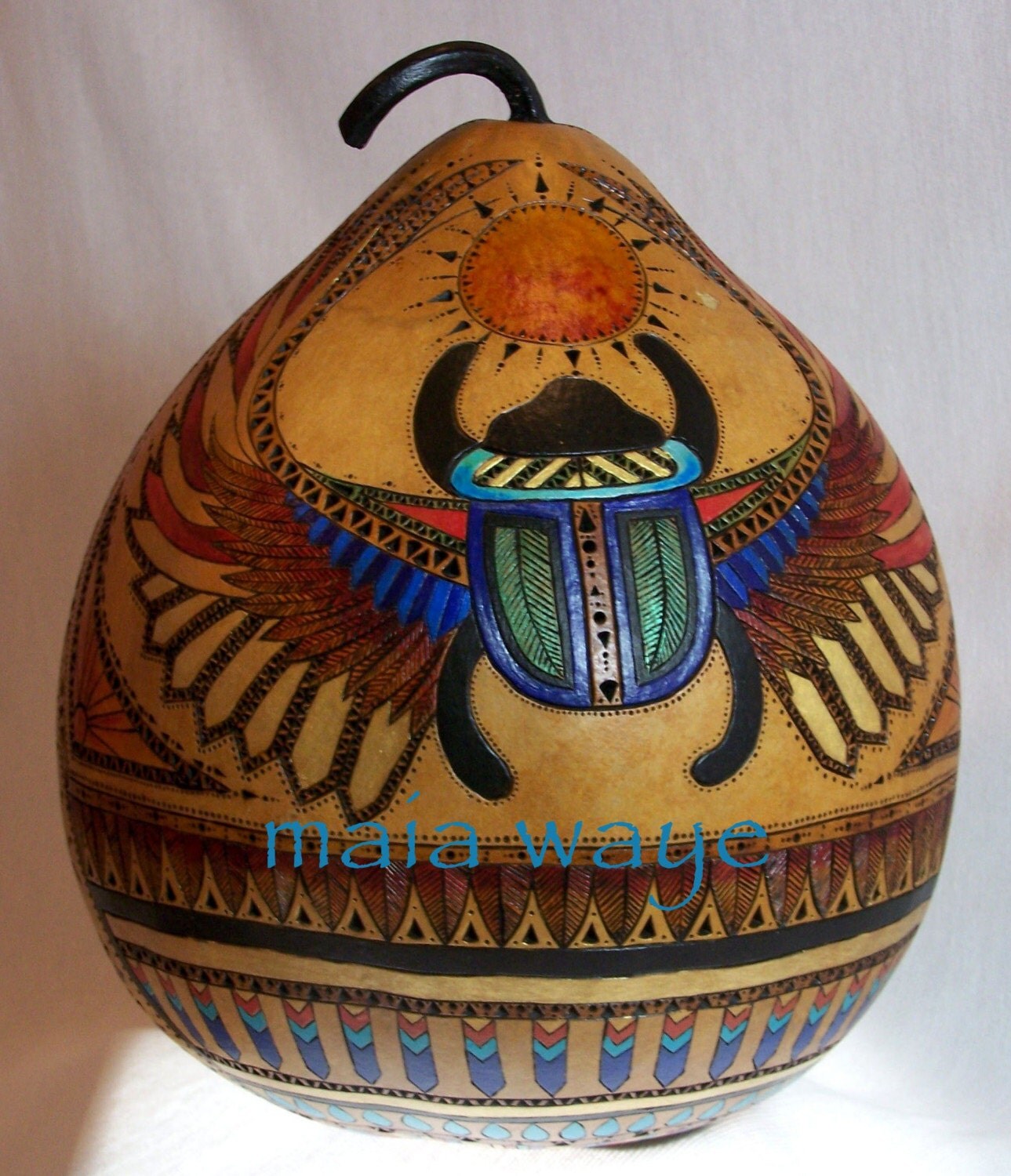
I came across this artist on etsy and am in love with her gourds. They are unfortunately out of my price range, but her prints are not and they are impressive as well. Pyrographed gourds are decorated with burn marks and then colored. This process is time consuming and exact, requiring great skill. These are two of my favorites, Momma's of Africa above and Tutankhamun with Scarab. I would love to have these to drool over in my home.
Her prints are stunning as well. Rich and vibrant with an inner harmony. Below are Triangle Sun and Water and Planet Shared

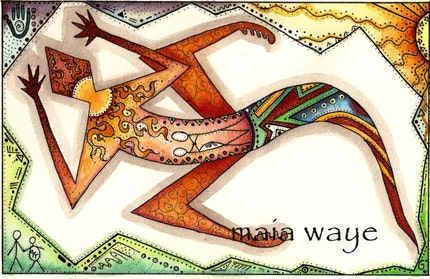
For more of Maia's art visit her etsy shop
Monday, June 22, 2009
This is why my blog is called the soapbox.
I live in an unincorporated area of Pinal County just south of Phoenix. The post office recently decided to change our zip code as it is one of the fasted growing areas in the state, if not the country. Or at least it was until the housing market fell apart, but the point is that there are a TON of people down here in a zip code that is just very full. There are people that are very upset with this, but that is not my issue at the moment. My issue is that for years, a segment of the people down here have wanted to incorporate into a town. I haven't made up my mind about this, I see advantages (a library closer than 45 minutes) and disadvantages (the taxes to fund the library). So just last week I start getting emails about a changing the name of the area at the same time as they change the zip code. The first email I recieve is about how a county supervisor is changing the name without input from the community, that this is being railroaded through without our say or knowledge. This concerns me, as it should. Next I get an email about how the supervisor and post office have decided to extend the deadline for this name change to allow for community involvement. Great! So far I'm right where they want me. Not thinking about WHY we need the name change, or who is asking for the name change, but just glad I get to be a part of it. But as the days go by and a I get a couple more emails about the process of choosing the name, I begin to lose my sheep status. I start thinking, what is the point of this name change? Is it the post office asking for a name to go along with the new zip code? Was it just an opportune time to create an identity apart from Queen Creek? Is it the first step towards incorporation? I start researching. I look at all the emails I've recieved. I look at the website of the Greater San Tan Area Coalition, the group that is co-ordinating this name change. I email them myself when I cannot find a reason specifically stated in all of this.
On the Greater San Tan Area Coalition"s website, I read several times that their goal is not to incorporate, but only a way of banding together to voice our wants and needs to the entities that control the area, Pinal County, Queen Creek, etc. The emails state this as well, including the reply to my own, which says "The name change is to give an identity to the unincorporated northeastern section of Pinal County - nothing more nothing less. This is not about incorporation or annexation or anything of the such. Simply an identity... ". Sounds good so far. However, I don't think that is the truth.
The news is stating that this is a step towards incorporation. I look at the items the GSTAC are concerned about. Protecting open space, attracting business, creating a plan for shopping and residential areas, traffic control, amenities (I assume this means a library, maybe a recycling program, a fire department, etc). These are all goals that require incorporation. An open space plan would require an environmental impact survey as well as an overall plan for our area. Where are the housing developments going, the shopping centers? That requires decisions on traffic control, new roads, etc. This kind of planning costs money, lots of money. Amenities cost money. How will they get that? A tax of course. But how? If we continue in to be an unincorporated part of Pinal County, how will the county tax us and not other areas. Can't use a sales tax. You might be able to create a special zone, a difficult proposition. Most likely we would have to incorporate. Only a city government is capable of providing the resources needed to accomplish the goals stated by the Greater San Tan Area Coalition.
Which brings me to the problem. The Greater San Tan Area Coalition is lying. They are trying to start the process of incorporation without our consent. They are telling us this is only a designation on an envelope, but it not. They want us to feel like a group because we will be more likely to behave like a group apart from Pinal County and Queen Creek. It is manipulation, plain and simple. My concern at this point is not whether a town of Bella Vista or whatever the name becomes is a good idea. It is how we are getting there and how can I trust those that are setting themselves up as the political entity to create this town when they lie right from the first step. As for the why, I never got a straight response, but I think it's obvious.
I live in an unincorporated area of Pinal County just south of Phoenix. The post office recently decided to change our zip code as it is one of the fasted growing areas in the state, if not the country. Or at least it was until the housing market fell apart, but the point is that there are a TON of people down here in a zip code that is just very full. There are people that are very upset with this, but that is not my issue at the moment. My issue is that for years, a segment of the people down here have wanted to incorporate into a town. I haven't made up my mind about this, I see advantages (a library closer than 45 minutes) and disadvantages (the taxes to fund the library). So just last week I start getting emails about a changing the name of the area at the same time as they change the zip code. The first email I recieve is about how a county supervisor is changing the name without input from the community, that this is being railroaded through without our say or knowledge. This concerns me, as it should. Next I get an email about how the supervisor and post office have decided to extend the deadline for this name change to allow for community involvement. Great! So far I'm right where they want me. Not thinking about WHY we need the name change, or who is asking for the name change, but just glad I get to be a part of it. But as the days go by and a I get a couple more emails about the process of choosing the name, I begin to lose my sheep status. I start thinking, what is the point of this name change? Is it the post office asking for a name to go along with the new zip code? Was it just an opportune time to create an identity apart from Queen Creek? Is it the first step towards incorporation? I start researching. I look at all the emails I've recieved. I look at the website of the Greater San Tan Area Coalition, the group that is co-ordinating this name change. I email them myself when I cannot find a reason specifically stated in all of this.
On the Greater San Tan Area Coalition"s website, I read several times that their goal is not to incorporate, but only a way of banding together to voice our wants and needs to the entities that control the area, Pinal County, Queen Creek, etc. The emails state this as well, including the reply to my own, which says "The name change is to give an identity to the unincorporated northeastern section of Pinal County - nothing more nothing less. This is not about incorporation or annexation or anything of the such. Simply an identity... ". Sounds good so far. However, I don't think that is the truth.
The news is stating that this is a step towards incorporation. I look at the items the GSTAC are concerned about. Protecting open space, attracting business, creating a plan for shopping and residential areas, traffic control, amenities (I assume this means a library, maybe a recycling program, a fire department, etc). These are all goals that require incorporation. An open space plan would require an environmental impact survey as well as an overall plan for our area. Where are the housing developments going, the shopping centers? That requires decisions on traffic control, new roads, etc. This kind of planning costs money, lots of money. Amenities cost money. How will they get that? A tax of course. But how? If we continue in to be an unincorporated part of Pinal County, how will the county tax us and not other areas. Can't use a sales tax. You might be able to create a special zone, a difficult proposition. Most likely we would have to incorporate. Only a city government is capable of providing the resources needed to accomplish the goals stated by the Greater San Tan Area Coalition.
Which brings me to the problem. The Greater San Tan Area Coalition is lying. They are trying to start the process of incorporation without our consent. They are telling us this is only a designation on an envelope, but it not. They want us to feel like a group because we will be more likely to behave like a group apart from Pinal County and Queen Creek. It is manipulation, plain and simple. My concern at this point is not whether a town of Bella Vista or whatever the name becomes is a good idea. It is how we are getting there and how can I trust those that are setting themselves up as the political entity to create this town when they lie right from the first step. As for the why, I never got a straight response, but I think it's obvious.
Subscribe to:
Posts (Atom)


